Sciatica vs. Neuropathic Pain: Key Differences
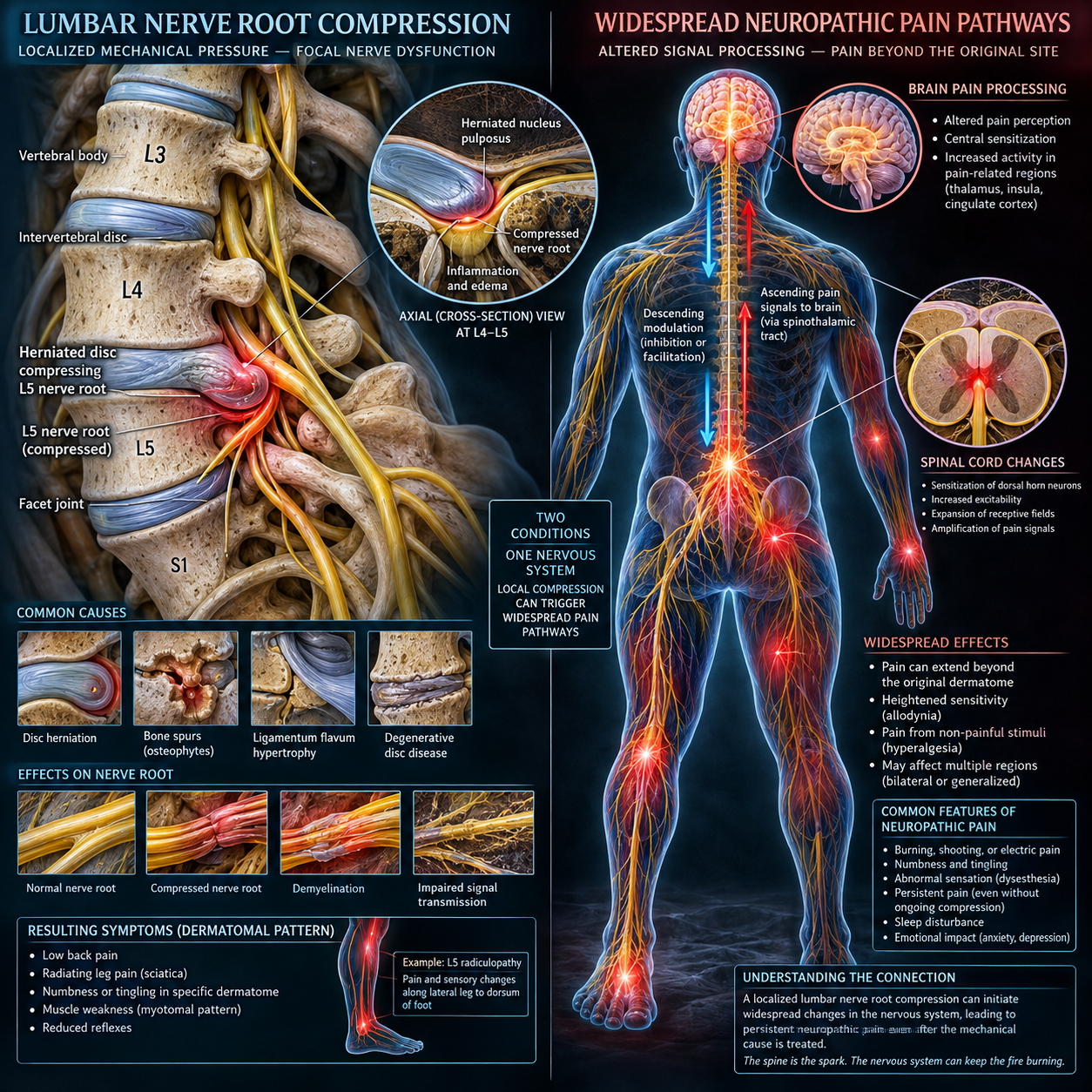
Sciatica and neuropathic pain can both cause burning, tingling, numbness, or electric-shock sensations. The central difference is that sciatica describes a specific pattern of pain involving the sciatic nerve or lumbar nerve roots, while neuropathic pain is a broader category caused by nerve damage or dysfunction anywhere in the nervous system.
Understanding that distinction can help you describe symptoms more accurately and seek appropriate care. It does not, however, replace a medical examination because several conditions can produce similar sensations.
What Is Sciatica?
Sciatica is pain caused by irritation, inflammation, or compression of the sciatic nerve or one of its lumbar nerve roots. It usually begins in the lower back or buttock and travels down one leg, often below the knee.
The sciatic nerve is the body’s largest peripheral nerve. It forms from nerve roots in the lower lumbar spine and sacrum before passing through the buttock and down the back of the leg. When a nerve root becomes compressed, the brain may interpret the resulting signals as pain, tingling, or numbness along that nerve’s route.
A herniated disc is a common cause of sciatica. Other possible causes include age-related narrowing of the spinal canal, bone spurs, vertebral slippage, or, less commonly, injury and other spinal conditions. Sciatica typically affects one side, although symptoms can occur in both legs.
The term describes a symptom pattern rather than one single disease. Two people with sciatica may have different causes and may need different treatments.
What Is Neuropathic Pain?
Neuropathic pain is pain caused by damage, disease, or abnormal function of a nerve or the nervous system. It can affect the feet, hands, face, trunk, back, or other areas and does not require a problem in the lumbar spine.
Common causes include diabetic peripheral neuropathy, shingles-related nerve damage, nerve entrapment, spinal cord disorders, chemotherapy-related nerve injury, and some forms of nerve trauma. In some cases, testing cannot identify a single cause immediately.
People often describe neuropathic pain as burning, stabbing, freezing, buzzing, or shock-like. Light touch may feel painful, a phenomenon called allodynia. Some people instead notice reduced sensation, pins and needles, or weakness. Symptoms may remain in one small area, follow a peripheral nerve, or appear symmetrically in both feet and hands.
Neuropathic pain is therefore a mechanism-based category. Sciatica can involve neuropathic pain mechanisms, but not every case of neuropathic pain is sciatica.
Sciatica vs. Neuropathic Pain: Key Differences
The main difference is specificity: sciatica identifies a characteristic lower-back-to-leg pattern, whereas neuropathic pain includes many types of nerve-related pain throughout the body. Sciatica may be one example of neuropathic pain when lumbar nerve compression produces abnormal nerve signals.
| Feature | Sciatica | Neuropathic pain |
|---|---|---|
| Meaning | A symptom pattern involving the sciatic nerve or related lumbar roots | A broad category caused by nerve damage or dysfunction |
| Typical location | Lower back, buttock, and one leg | Any body area, including hands, feet, face, back, or limbs |
| Common causes | Herniated disc, spinal stenosis, bone spur, or nerve root compression | Diabetes, shingles, nerve injury, medication effects, entrapment, or spinal disorders |
| Pattern | Often follows a path down the leg and may worsen with coughing, sitting, or movement | May be localized, widespread, symmetrical, or linked to a particular nerve |
| Evaluation | Back and leg examination, strength and reflex testing, and selective imaging | History and neurological examination, with tests guided by the suspected cause |
This comparison is useful, but categories can overlap. For example, a person with diabetes may have foot neuropathy and separately develop lumbar nerve root compression. Location, timing, associated weakness, and the underlying cause all matter.
Common Symptoms and How They May Feel
Nerve-related pain commonly feels burning, shooting, stabbing, tingling, or electric, and it may occur with numbness or weakness. Sciatica usually adds a recognizable radiation pattern from the low back or buttock into the leg.
Symptoms often associated with sciatica
- Sharp or shooting pain from the buttock into the thigh or calf
- Numbness or tingling in part of the leg or foot
- Weakness when lifting the foot, standing on the toes, or bending the knee
- Pain that increases with prolonged sitting, coughing, sneezing, or straining
- Symptoms that affect one side more than the other
Symptoms often associated with neuropathic pain
- Burning, buzzing, pins and needles, or electric-shock sensations
- Oversensitivity to clothing, bedsheets, or light touch
- Reduced ability to feel heat, cold, vibration, or injury
- Symptoms in both feet or hands, especially with peripheral neuropathy
- Pain that persists even when muscles and joints appear normal
Muscle strain and joint pain more often cause aching, tenderness, stiffness, or pain with specific movement. That distinction can offer clues, but sensations overlap. A person can also have nerve pain and musculoskeletal pain at the same time.
Diagnosis and When to Seek Medical Care
Diagnosis usually starts with a medical history and physical examination, followed by imaging or laboratory tests when the findings justify them. Clinicians assess pain distribution, sensation, muscle strength, reflexes, walking, spinal movement, and possible triggers.
Magnetic resonance imaging may help identify a herniated disc or other nerve root compression when symptoms persist, neurological deficits appear, or a procedure is being considered. Imaging is not always needed during the first evaluation because many cases improve with conservative care, and scans can show age-related changes that are not causing symptoms.
Evaluation for broader neuropathic pain may include blood tests for conditions such as diabetes or vitamin deficiencies, medication review, nerve conduction studies, or referral to a neurologist. The appropriate tests depend on the symptom pattern.
Seek urgent medical care for progressive leg weakness, loss of bladder or bowel control, or numbness in the saddle area around the inner thighs, buttocks, or genitals. These red-flag symptoms can indicate serious compression of the lower spinal nerves. Fever, unexplained weight loss, major trauma, or a history of cancer also warrant prompt assessment.
More information about neurological warning signs and back pain evaluation is available from the National Institute of Neurological Disorders and Stroke.
Treatment Options and Medication Considerations
Treatment depends on the cause, severity, duration, and presence of weakness or other neurological changes. Most uncomplicated sciatica plans begin with appropriate activity, physical therapy, and pain relief while the underlying irritation settles.
Depending on the situation, care may include:
- Maintaining gentle daily movement while avoiding activities that sharply worsen symptoms
- Physical therapy focused on mobility, strength, posture, and nerve-related movement limitations
- Heat or cold for short-term comfort when either provides relief
- Anti-inflammatory or other pain medicines when medically appropriate
- Targeted injections or surgery for selected cases involving persistent severe pain, significant weakness, or structural compression
Gabapentin is a prescription medicine used for some forms of nerve-related pain and for certain seizure disorders. A clinician may consider it when neuropathic symptoms are prominent, but its benefit for ordinary low-back pain or uncomplicated sciatica is not guaranteed. It can cause drowsiness, dizziness, swelling, or coordination problems, and it may interact with other medicines that slow the nervous system.
Do not start, stop, or change gabapentin without medical guidance. The same principle applies to opioids, sedatives, anti-inflammatory drugs, and combination pain medicines. Choosing medication for potential nerve-pain relief means accepting possible side effects, and the safest choice depends on kidney function, age, other conditions, and current prescriptions.

Which Condition Might You Have?
You may be describing sciatica when pain starts in the lower back or buttock and radiates down one leg; broader neuropathic pain is more likely when symptoms occur elsewhere or in a symmetrical pattern. Only a qualified clinician can determine the cause.
- Pattern: Does the pain follow a line from the back or buttock into the leg, or is it in the hands, feet, face, or several areas?
- Sensation: Are burning, shooting, tingling, numbness, or electric sensations present?
- Function: Is there weakness, tripping, difficulty lifting the foot, or trouble walking?
- Context: Do you have diabetes, a recent rash, an injury, spinal symptoms, or a medicine that can affect nerves?
- Urgency: Are bladder or bowel changes, saddle numbness, or rapidly worsening weakness present?
Use this checklist to organize information for an appointment, not to self-diagnose. Write down when symptoms began, where they travel, what worsens them, and any numbness or weakness. That record can make the clinical assessment more efficient.
Frequently Asked Questions
Is sciatica a form of neuropathic pain?
Sciatica can be a form of neuropathic pain when lumbar nerve root compression or irritation creates abnormal nerve signals. The terms are not interchangeable: sciatica refers to a specific distribution, while neuropathic pain is a wider category.
How can sciatica pain feel different from other nerve pain?
Sciatica commonly travels from the lower back or buttock down one leg. Other neuropathic pain may affect the feet, hands, face, or several areas without any back pain.
Is gabapentin used for sciatica or neuropathic pain?
Gabapentin is used for some neuropathic pain conditions and may be considered in selected cases of sciatica. Its effectiveness varies, and a prescriber should weigh potential benefits, side effects, interactions, and the underlying cause.
When is sciatica considered an emergency?
Seek urgent care for new loss of bladder or bowel control, numbness in the saddle area, or rapidly progressive weakness in one or both legs. These red-flag symptoms require prompt evaluation.
Can neuropathic pain occur without back pain?
Yes. Neuropathic pain can result from diabetes, shingles, nerve injury, entrapment, or other conditions affecting nerves outside the lumbar spine. It may occur in the feet, hands, face, or another localized area.